Respect the Writing Process, But…
“Honoring the process,” is either a mantra in the world of the artist, or a cliche, depending on one’s perspective. Perhaps it alternates. One thing is clear; this exhortation is ubiquitous.
Actually, right or wrong, the anecdotal survey suggests that it more often arrives in either form within the sphere of those who struggle to gain an external toehold with their creations–those who do not sell much or at all. Those lacking a consistent viewership or readership, as they case may be.
Those such as myself.
And while I acknowledge that commercially successful and/or critically acclaimed creators have just as much likelihood and right to full embrace process over outcome, beyond a certain point of success our capitalist, attention-and-acclaim-driven society tends to reward inferior creations more and more, satisfied as they are with the mere name attached to them.
Process is rendered incidental to the highly successful, unless they possess a particularly intense commitment.
Those of us in the perpetual trenches of art, (reasons often unknown) are far more often faced with the necessity to focus on process.
It comes easier to some than to others, this directed attention on the making-of as opposed to the enjoyment-of by others.
Yet simply, “focus on the work,” and “revel in the process” are often too cold, clinical, void of inspiration to those who seek even a modest audience.
Count me among such folks.
Intellectually I accept the wisdom of a toiling focusing on the process over results. My heart, however, sees this as the tedium born of surrender, if I am not careful.
So I tell myself that to write stories and novels that may never be read despite my best efforts is about bringing as many fully-formed worlds into existence as I can before I die.
Sounds dramatic, if not morbid. It’s probably a dash of both.
Nevertheless it is the element of transcendence I require in order to tap into at least some motivation for writing and creating.
Without this impetus to define new lives, worlds, realities, (or in the case of my non-fiction thought processes), I’d do what my Autistic mind does so well; keep everything in my head. After all, if nobody is going to enjoy what I create (as per the pattern of my entire career) why put effort into getting such things “down on the page?”
Probably because to resign to this is to allow all such creations to die with me when the time comes.
True, my computer files, scribblings in notebooks and stacks of printed sheets may, and likely will be consigned to oblivion once I die. The odds of them being consumed by anyone appreciative party at that point appear miniscule.
Even so, my creations are fully in the world. I have put my mind and spirit through the experience of pulling what I conceive through the magical forcefield of thought into the tangible reality of the senses.
That is a process that might just by mystical, and self-affirming enough to be worth the effort mores than the clicking away into the void of an empty room within an empty world that doesn’t want what my spirit offers.
If you struggle with finding the nobility of creating for “nobody,” embrace this notion of external realization of your ideas. It may not bring in the audience you long for, but it has a chance of making the process a powerful one.
That is what I am telling myself lately, at least
Oppression and Expression: On Privilege
A rush of inspiration leading to a hastily scribbled lyric or poem on a TGI Friday’s napkin is expression.
The first sentence in a year(s) long process of writing an epic 100K word fantasy novel after just as long a time pondering it is also expression.
I’ve said before, as recently as the previous post, that self-expression is vital.
It isn’t universal, though.
My life afford a certain, though limited privilege regarding the most obvious acts of creation and expression. I am working class, and often exhausted to be so. But thankfully for the time being and hopefully forever I have shelter and food, and of course white skin.
I have the room, the time, and partially the identity today that allows me the sacred privilege of usually being left the hell alone.
You, or another reader of this page, my novels, or any of my creations of the past certainly may not enjoy all of those things at once. Even my minimal complement of these heart-affirming, life-protecting statuses shields me more than a person who lack one or all of same.
Not all born authors can write their books. Not every dancer hears the music of their life.
But this illuminates a vital truth about creativity and self-expression; It’s only two true components are personal authenticity and lack of shame for same.
If you cannot create a book today, create a path to work that’s more scenic. If you are too afraid to write your song, clamp the noise-cancelings on your head and put someone else’s on repeat.
To partner with expression is to engage in expression.
Those of us that are barely privileged, such as myself, and those who are mega-privileged but retain their humanity express our own thoughts in corporeal form so those that perhaps cannot at the moment can nonetheless feed their hungry souls with our cultural sustenance.
My self expression of a story may allow your authenticity when you read it for snatches at a time behind your desk, or in your temporary hospital bed.
Or worse.
I do not ask everyone, under all circumstances to either ignore their reality by creating constant art. Nor do I insist that her song, my book, their movie be consumed as mere blind numbing agent. I only ask that whether your own or someone else’s you keep the seed of expression buried somewhere within you, no matter how dark it gets, so that when the sun does return, that seed is nurtured.
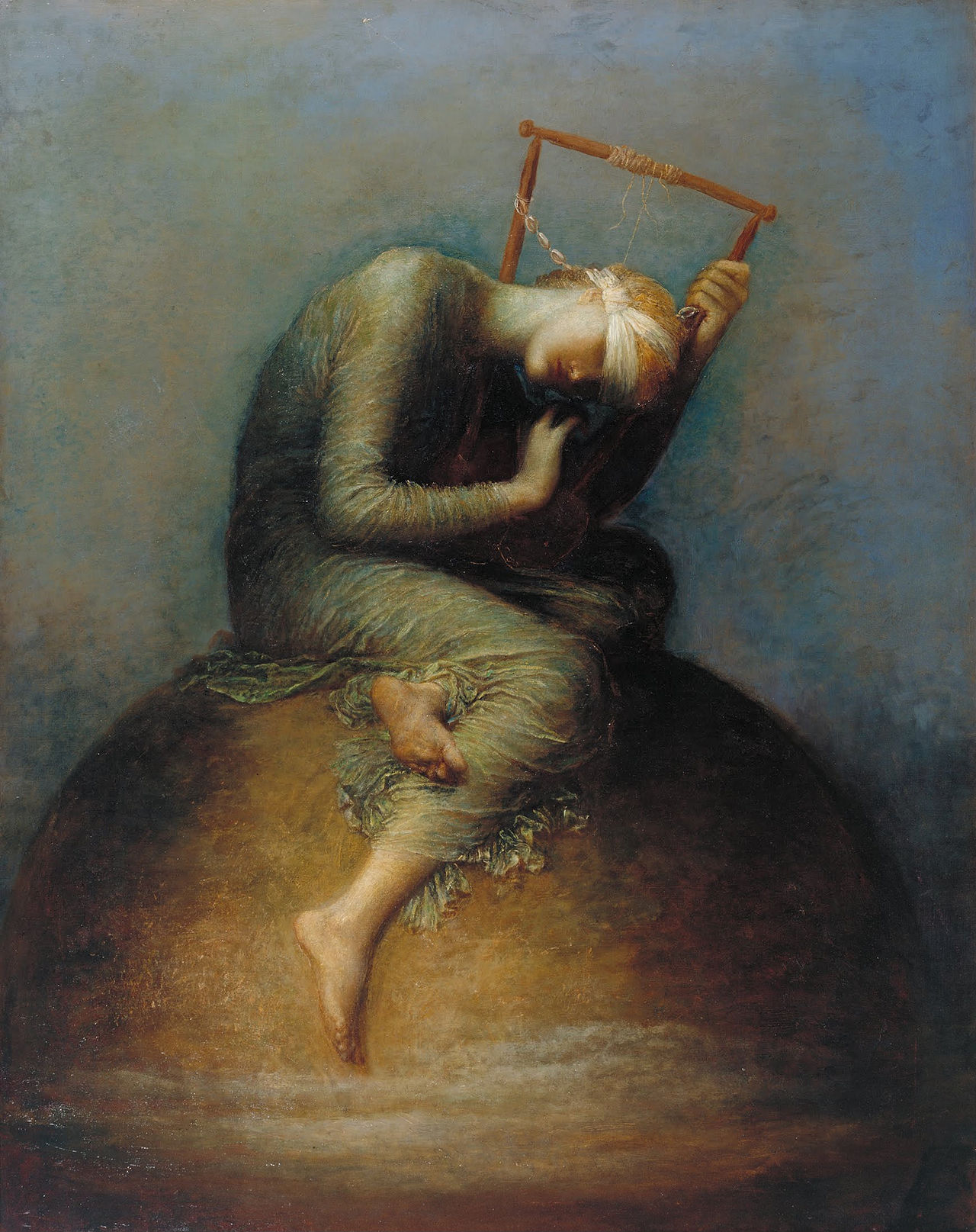
Art will not cut away every shackle. But the belief in art, anybody’s, will keep the deepest part of you alive long enough to know you cannot be eradicated without your surrender.
What to Write in an Age of MAGA.
My novels consist of:
-A story where a Greek God visits Earth.
-A snowed-in cozy murder mystery.
-A woman with the power to actually see promises.
-President James Garfield in the afterlife.
-A piece so experimental, sometimes even I have to refer to my old notes to remember what I was thinking exactly.
-A group of refugees in a bombed out city post civil-war trying to mount The Tempest.
And just a few days ago, I began my next novel; the genre is space opera. (I think, the definitions can be so fluid for such things.)
Do you see a partial pattern?
I’ll make it easy for you; almost all of my novels involve an element of the fanciful, the alien, the Divine.
One might also say a cozy mystery, though fully human involves a larger than average suspension of disbelief.
What I have not written to date is a searing indictment of, or soaring literary account against a moribund society replacing freedoms with oppression, vitality with violence.
In other words, I haven’t yet used my fiction as reflection of the deteriorating state of American societal and political norms. (Or for that matter the revelation that we have always been much closer to collapse than we like to tell our kids.)
This isn’t to say I never will write such a story. I have no such idea in the cue, but speaking in broad fashion there are whispers of whispers of ideas along this line. They are just not in the realization/acceptance stage.
Should they be? Should I, as an author, or you, if you are also an author, take on such genres and topics as part of our responsibility to the situation, and those who are/will suffer from same? Should we set aside whimsy and fantasy and weirdness and redirect our collective pens at the swords of encroaching tyranny by way of the stories we tell?
Should we be more timely?
I don’t know, should we?
That’s not the cop out it seems to be.
We creatives should continue to write, to create, to paint, to sing, to perform that which speaks to us most. There is nothing so dangerous to and rebellious against a tyranny than free, unfettered expression of self. A commitment to ballet while the world crumbles around you should not be confused with the proverbial Nero fiddling while the empire burns. It is a refusal of silence, a denial of diminution into passive, obedient cogs in the death machine that builds itself around us daily. Hourly.
Is there an element of escapism in providing readers, viewers, audience members tales of elves and starships, magic wands and mechanical men? For certain, and I would question anyone who refutes the utility of the periodic escape from this world.
Yet it is without a doubt more than that. It’s but one movement in the Dylan Thomas symphony to rage against a dying of our light.
Somebody will write the “important” fiction. (A term I use so loosely as to be laughable.) Perhaps at some point you will. Or I. But it won’t mean a damn if you lose yourself to write or read it.
Live.
Long Day’s Journey into Process
I have never rushed my work. Most of my novels took 11-12 months to write, and another six months or so of proofreads and edits. A few of the early ones did not even get that far until I set the rough draft aside for two months to let it “rest” in my head.
Though I have self-published my work, I have always been as deliberate as possible when doing so. My name is on the work, after all, I am not about to release sloppy products out there on purpose. Had I been able to afford professional editors more often, I would likely have availed myself of them. I wasn’t going to let a measly thing like budget, however, stand in the way of me sharing my stories with the world at large; I meticulously did it myself.
In the last year or so, what with my mother’s death and a few other less severe life changes, I have not merely been deliberate in writing, I have been virtually inert. As I construct in multiple facets of life a new normal out of the salvageable rubble of the previous longstanding normal, I am gradually writing again. (As I mentioned in a previous post about grief while writing a novel.)
After such a painful and irregular hiatus from consistent production, one might assume I’d be chomping at the proverbial bit to crank out new work. That isn’t the case, and furthermore, I foresee myself embracing the process of longform content creation even more than before. (My days of one novel per yearISH are unlikely to return.)
A bit of process almost every day may or may not result in a finished draft later sooner than my previous pace. Yet I imagine it serves as a reminder of what I am doing, and why.
To sustain the proper esteem for what imagination, creativity and story telling as a whole do for myself and the world (sometimes) I intend to commit to the state of writing, as much as the writing itself. I want to prioritize the engagement with parts of myself connected to the collective subconscious of creativity that everyone from Shakespeare to Shatner has committed themself to in one way or another in pursuit of their version of art.
I always respected this engagement–counted myself fortunate that I possess sufficient abilities to make use of it the way I do. Yet in previous years I saw it perhaps as a sacred vehicle by which I could arrive at a destination of story craft–whereas now I intend to treat it more as a sacred cottage…stationary, familiar, powerful in its own right even if there is eventually a world beyond it.
An aspiration to “stay a while,” if you will, but not dragging my feet and procrastinating on the latest project.
I do this in my theatre life all the time. 90% of being in a production is process, hopefully leading to an exhilarating but brief presentation of the accumulated result to the world. I am an actor that loves to rehearse a lot, and would hate to go on stage with inadequate rehearsal behind me. (Which on occasion I have had to do, and would be happy never to do again….)
Not sure why I have never come to the same conclusion about the process of writing. Perhaps because theatre is communal and I have no choice, while writing is solitary and I can get ahead of myself.
Whatever your passion projects are, I encourage you to join me in a more intentional submersion into process itself.
What is your process?
Art(TISTS) Heal
Doesn’t Matter what kind,.
To be in the proximity of other artists committed to the creative act is a balm unmatched in most other aspects in a creatives life. Healing, life affirming, increasing the depth of field of our spiritual vision.
Last week, I experienced all of the above as I took part in the one-weekend only production run of Taming of the Shrew at a local theatre.
It was the first show without my mother on the earth.
But before that, it was the first tech week without her, first rehearsal process without her, first audition without her. This was four months ago, and thus four months less into a grief process that has yet to reach it’s one year mark.
I wasn’t sure i could, or even wanted to do theatre anymore. After all, even when Mom could not come to the show, we shared the process, and she always stayed up late to hear how an opening went when I got home. She had been, as with all things in life, the central witness of my existence.
That being so, I nonetheless determined that part of the healing process may involve a return to one of the most longstanding creative outlets I have; acting. Shakespeare, particularly.
I went into the audition with no thoughts of who I wanted to play. The show was never a favorite of mine, and in fact I never much cared for it on the whole. But a familiar group was doing Shakespeare ion a familiar place, and this was the way to get back into it.
Right away as I read, the character of Grumio spoke to me for whatever reason. I knew in an instant what i can bring to the role, and how well it would suit my style and personality. The director agrees and gave me the role, and from that moment on just about every rehearsal someone comments on how I was giving so much to the character, confirming the feelings of a perfect match.
Other than some harried scheduling with my part time job and rehearsals, the process went about the same as normal until the last one. Ab semi-open rehearsal pay-what-you-can chance for people to see the show that could not see it on the regular days.
I broke down in front of my director, frightened and uncertain to a degree I was not used to an hour before “opening” the show. I figured it was coming…I was shaky in the car on the way to the theatre.
It had to happen. Many things played a role in my state by then, and it probably came from multiple reasons. But the darker, colder void of a world without Mom, focused like a laser into the microcosm of an audience just cut through me on the night. I knew I could deliver the lines and hit the lights, but suddenly doubted if I would connect, or feel connected to the room, and that is a death to a performance.
My conversation with my director, whom I love, is private. As are the particulars of other conversations and chats with different people to whom I am bonded in and around this community. But just as the breaking down revealed a vulnerability that I an unused to showing in front of even the people I care about most, the aftermath of support, for both my performance and my grief reflected back at me. And the reflection said that despite my inner doubts, I am in fact a real person A person with talent, a person worth of, (and actively in possession of) the love of my colleagues and friends.
I have rarely felt love with so few constrictions or distractions. No performative support, no filters. And, rarest of all, no mask, Rare for even that environment. At least up until now.
Being among fellow actors and creatives was for certain part of the calculus of destiny, (or the guidance of my angels if you will) for this moment in my life. If it had not been artists, not only would I have likely doubted the depth of the support expressed, but I would not have allowed myself the vulnerability in public to begin with.
And wouldn;t you know it, the show went well.
Mom’s death blasted a hole in my castle walls. The use art and the proximity or artists did not merely seal up the whole when I wasn’t looking; they built a whole new hallway or wing in which to put it. All be simply being artists, good people, and there for me all at the same time.
It is not merely that the arts heal, though they do. It is not merely that the creative act itself is a balm, if we can bring ourselves to it , though it is. It is about the people. It is always about the people. The people creating with you, or people nearby creating other things, but nonetheless aware of what I am doing.
I cherish the cards, the words, the gestures and gifts more than any of the people involved could possibly know. But the voluntary folding of my life force into the community of artists, whether or not we are in the process of creating is the profound takeaway from this experience.
And I never would have known it had I not opted to both audition, and not fight fear within me on the moment it occurred.

 Ty Unglebower